

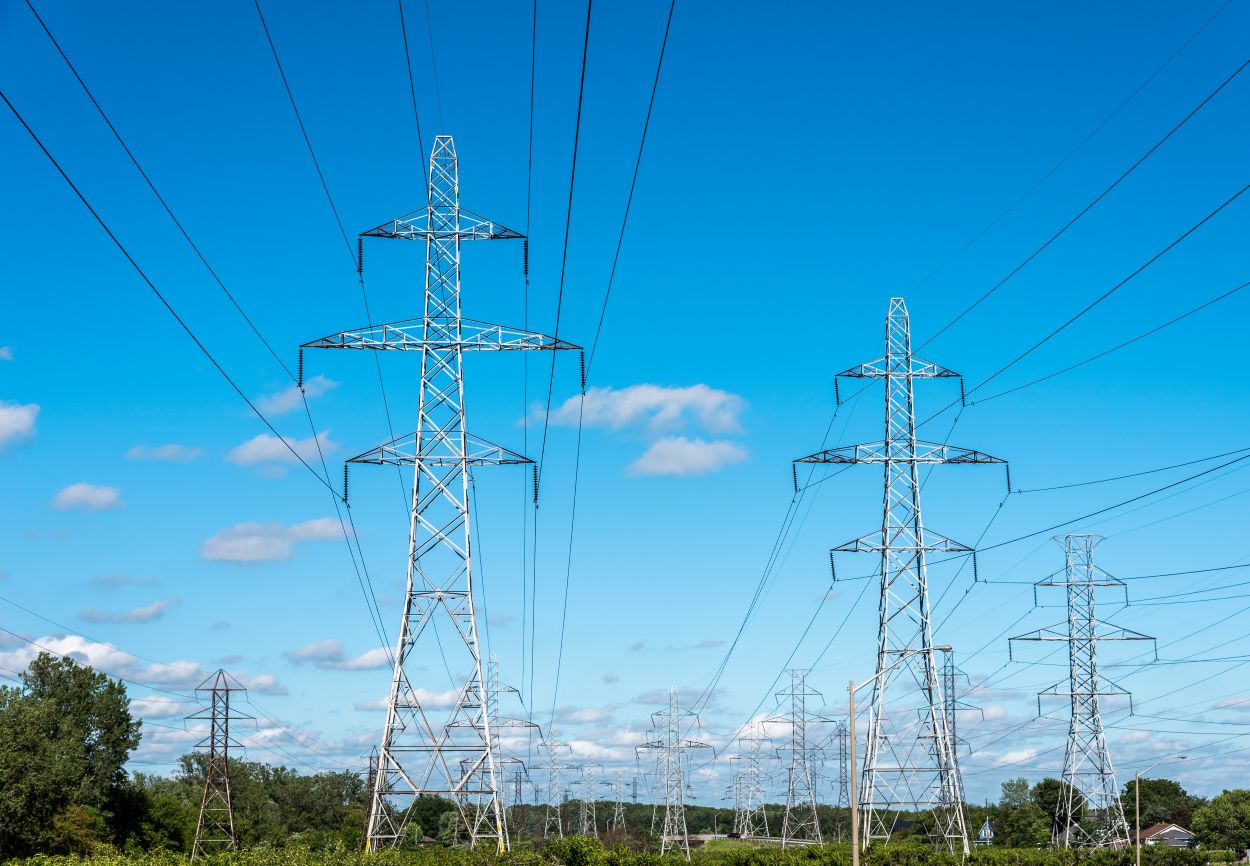
Electricity generated at a power plant starts its journey at voltages around 11kV and is increased up as high as 800kV to transmit power over long distances. Yet when you charge your phone at home, you’re using a comfortable 120V. Safeguarding that significant voltage step-down is essential for delivering safe, reliable power. Switchgear fulfills this role by sensing faults and shifting power paths to maintain grid stability.
For utility engineers and asset managers, switchgear reliability is essential. When it works, nobody notices. When it fails, thousands, perhaps millions, lose power when a fault goes unnoticed. That’s why switchgear monitoring and condition-based maintenance are becoming indispensable for modern grid operations.
How Switchgear Manages Voltage Across the Grid
The electrical grid is like a multi-level highway for power. Just as traffic flows from interstates to highways to residential streets, electricity travels through distinct voltage levels.
Transmission level (765 kV to 69 kV): Power travels long distances from generation sources. By increasing voltage, energy loss is minimized across the hundreds of miles.
Sub-transmission level (138kV to 34.5 kV): Regional distribution networks that feed multiple communities and industrial facilities.
Distribution level (34.5 kV to 4 kV): The neighborhood network bringing power closer to end users.
Utilization level (440V to 120V): Safe voltage level to power homes, offices, and most commercial equipment.
At every transition point, switchgear protects and isolates abnormal power flow, ensuring stable and safe voltage delivery from the transformer.

Switchgear Protection Prevents Cascading Grid Failures and Blackouts
Reliable power depends on how quickly the grid can respond to danger, and that job falls to the switchgear. During fault conditions like short circuits, overloads, or equipment failures, it acts as the grid’s first responder. It detects the problem within milliseconds and isolates the affected section, preventing cascade failures that could black out entire regions. This split-second decision-making keeps a tree falling on a distribution line from taking down an entire city’s power supply.
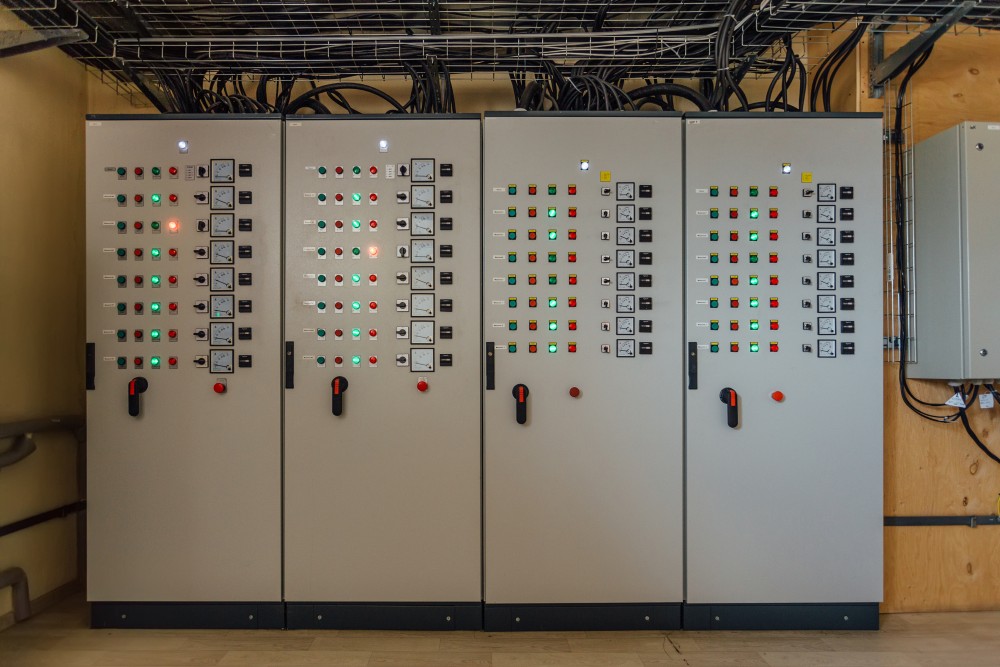
Switchgear isn’t a single piece of equipment but an integrated system of circuit breakers, fuses, switches, relays, and control systems working in concert. It protects the grid by automatically detecting and interrupting fault currents before equipment damage occurs. It isolates sections of the grid for maintenance without affecting other areas. It controls power flow direction and magnitude across the network, while providing real-time data on current, voltage, and power factor—all critical functions that must be performed simultaneously. These functions are critical everywhere switchgear is deployed.
In substations, MV and HV switchgear manages the handoff between transmission and distribution networks. At industrial facilities, it protects expensive machinery and ensures continuity of operations. In commercial buildings, LV switchgear distributes power safely throughout the structure. Each application demands reliability because failure means lost revenue, compromised safety, or immediate crisis.
Why Traditional Maintenance Fails Modern Grid Operations
Each application demands reliability, but here’s the problem: mechanical and dielectric failures occur regularly, often because equipment doesn’t receive adequate testing and inspection between scheduled maintenance windows. The traditional time-based approach of inspecting switchgear every one, two, or five years regardless of condition is proving expensive, inefficient, and increasingly inadequate.
Most utilities still operate on predetermined maintenance schedules. You pull crews off other work, deenergize sections of the grid, and spend hours examining equipment that might be perfectly healthy. Meanwhile, that switchgear cabinet that’s actually developing problems was neglected and is slowly degrading day by day. You’re maintaining based on the calendar, not on actual asset condition.
This approach might have worked decades ago, but the grid is changing faster than maintenance schedules can adapt. North America’s switchgear base is aging, with much of it approaching or exceeding design life. At the same time, demand is surging from electrification of transportation and heating, and renewable energy integration adds another layer of complexity with bidirectional power flows that switchgear was never designed to handle.
You can’t keep the lights on across entire regions without addressing the condition of these critical assets. And you certainly can’t scale your maintenance workforce fast enough to manually inspect the growing number of aging switchgear demanding attention.
How Real-Time Switchgear Monitoring Improves Reliability
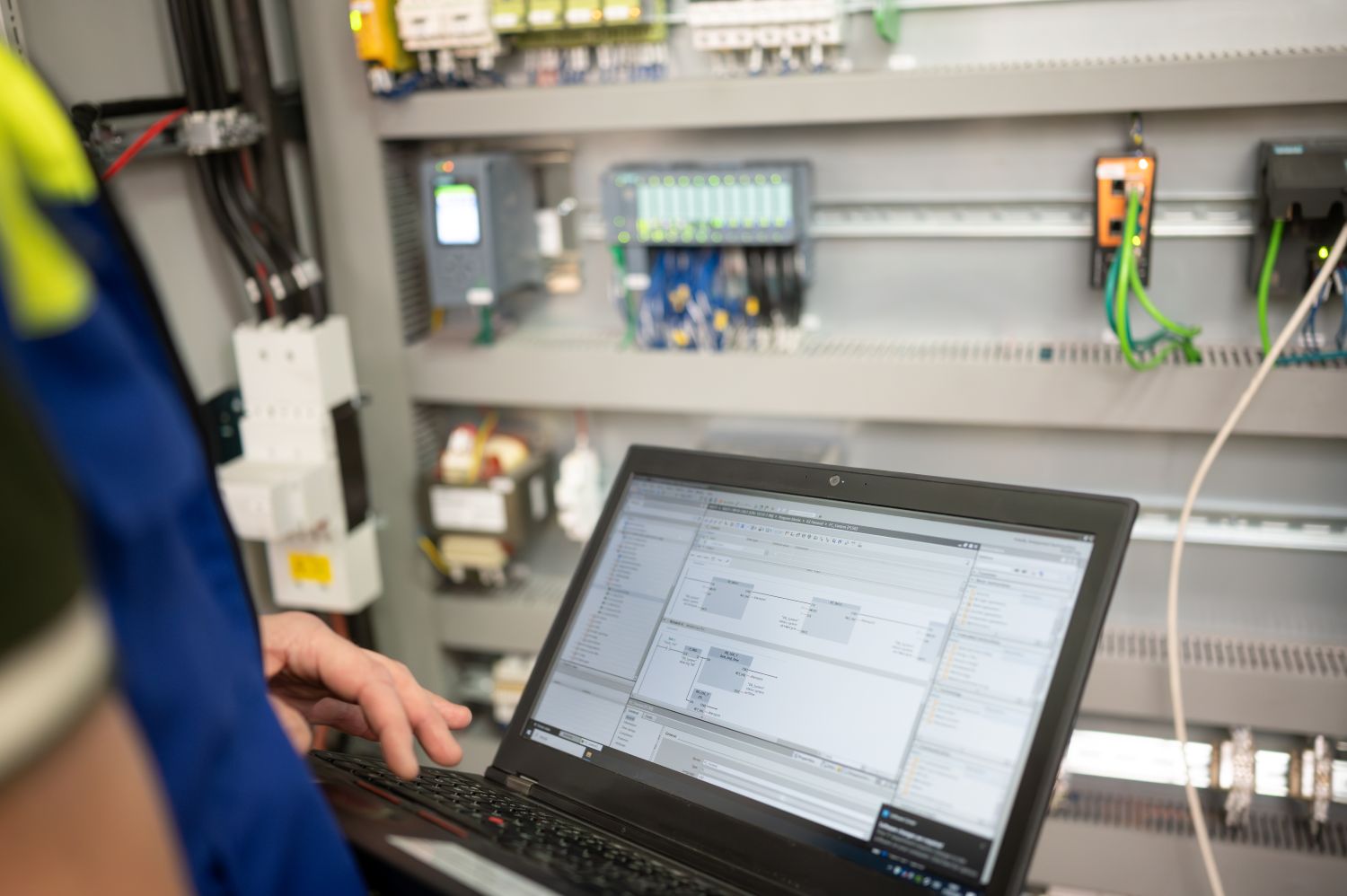
This is where continuous monitoring changes everything. Instead of guessing when maintenance is needed or waiting for catastrophic failures, you gain real-time insight into actual asset condition, and you can act on it before problems escalate.
The Dynamic Ratings Switchgear Monitor (SWGM) represents a comprehensive approach to this challenge. Unlike basic monitoring systems that simply track operating cycles, the SWGM combines high-speed waveform capture with multi-parameter sensing to provide a complete diagnostic picture with every breaker operation. Here’s what that means in practice:

Waveform capture analytics provide automated graphical comparison of breaker operations. Smart Capture technology overlays current operations against historical waveforms, making performance degradation visually apparent. Issues with latch and bearing performance, lubrication problems, or auxiliary contact degradation become visible before complete failure occurs.
Gas and environmental monitoring tracks density, temperature, and humidity in SF6 and dry air insulation systems. Beyond simple leakage alerts, the system trends time until lockout and calculates mass gas loss for actionable scheduling intelligence. Environmental monitoring extends to cabinet heaters and control conditions, catching heater failures that could cause condensation, corrosion, and premature component aging.
Critical circuit integrity monitoring detects changes in trip circuit resistance that signal developing problems in trip coils and related components. This matters because a failed trip coil means your breaker won’t open when needed. Meanwhile, by using precise cumulative I²t calculations, the SWGM performs interrupter condition tracking, enabling maintenance to be performed only when needed and reducing both cost and manpower compared to time-based maintenance.
The deployment advantage: a single Switchgear Monitor can monitor up to six switchgear bays simultaneously, capturing individual waveforms for each bay’s trip and close coils. You get open, close, arcing, and interrupting times for each bay, plus motor starts, currents, and runtimes—all from a single installation. Early detection means scheduling maintenance during planned outages, ordering parts before they’re urgently needed, and avoiding the exponentially higher costs of emergency repairs.
The Business Case: Safety, Reliability, and Smarter Spending
The safety implications alone justify the investment. Switchgear failures can be violent—arc flash incidents cause severe injuries and fatalities every year. Monitoring provides advance warning, allowing you to address developing problems before they reach dangerous levels. Your field crews work on equipment you know is safe, not equipment you hope hasn’t deteriorated since the last inspection.

For asset longevity, early detection prevents collateral damage. A degrading bushing identified early requires replacement of one component. Left unmonitored until failure, it creates a larger issue and forces an extended outage. Tracking performance trends means watching the actual health trajectory of your equipment, not guessing based on age or cycle count.
There’s a paradox traditional maintenance creates. Invasive time-based inspections often mask performance issues by exercising the mechanics, and the procedures themselves can introduce new problems. Continuous online monitoring observes equipment in its actual operating state, revealing real degradation patterns rather than artifacts of maintenance intervention.
Implementing Continuous Monitoring in Utility Switchgear Operations
Continuous monitoring isn’t about replacing your maintenance practices but making them smarter. You still need skilled technicians and engineers making decisions. But now those decisions are informed by data, not guesswork. You’re deploying your resources where they’re actually needed, extending the life of healthy equipment, and catching problems before they cascade.
Often overlooked in favor of transformer or circuit breaker monitoring, switchgear acts as a guardian, proactively defending the power grid from faults. By isolating faults and defending the network, it keeps electricity flowing safely and efficiently.
What’s the condition of your critical switchgear assets right now? If you can’t answer that question with confidence, it’s time to reconsider your monitoring strategy. The grid—and the communities depending on it—can’t afford to wait until the next scheduled inspection. Contact us today to learn more how real-time switchgear monitoring can improve safety, reliability, and asset performance.

Author: Katie Garland, Dynamic Ratings