Introduction
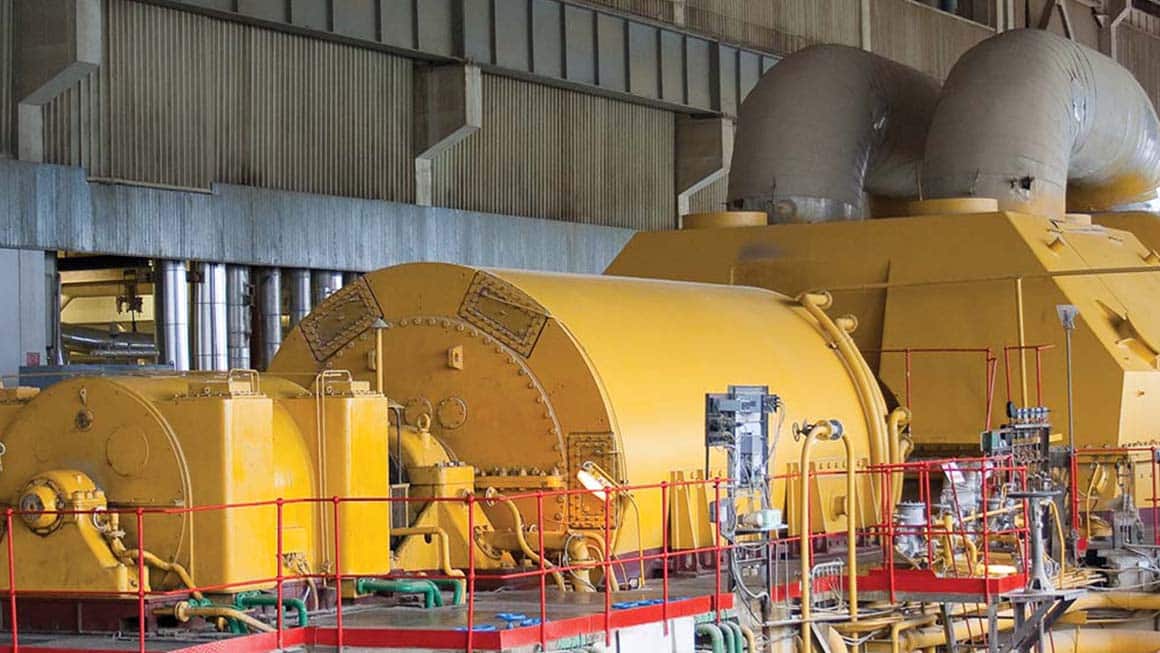
A utility’s 700MW steam generator system in the United States of America was being exposed to ongoing and potentially destructive levels of electrical partial discharges that went undetected during normal maintenance inspections.
A utility’s critical steam turbine generator tripped offline via a lockout relay without any other indications from other protective relays, thereby leaving the actual cause of the trip unknown. The utility followed procedures and conducted a preliminary investigation but was unable to find the cause for the trip. The unit was put back online, but the utility committed to further investigation and data review.
The Challenge
Relay personnel assigned to investigate why the unit tripped noted that a ground current relay was picking up but would reset before timing out and triggering the lockout. The ground current relay operation was determined to be the cause of the lockout relay operation but it was still unclear what was causing the relay to operate. Since the generator and iso phase bus were equipped with a partial discharge monitoring system, the data from the monitor was downloaded to see if it could offer any clues. The data showed the monitor had recorded periodic, short duration, high magnitude discharges. The pattern of the discharges appeared to indicate “floating potential” discharges were occurring.
Typically, in isolated-phase busses, these types of discharges occur where the connection to the bus support insulators are loose and not solidly connected to the bus. The resulting air gap, results in sparking. While the type of discharge was apparent from the pattern, the exact location of the defect could not be determined. The utility reached out to their monitoring partner for assistance.
Online Monitoring System Leads to Failure Identification
The utility had deployed a Dynamic Ratings’ Rotating Machine Monitor (RMM) and its analytic software on this particular system. The utility contacted Dynamic Ratings for support with using the monitor’s analytics software to its fullest investigative nature. Dynamic Ratings coached the investigative team through the process of downloading and interpreting the monitor’s data files from the unit.
They noted very unusual patterns in the phase resolved data that warranted more investigation. Shown below, the analytics software made the timing and magnitude of destructive activity visual for the utility’s operations and maintenance teams.

Significant changes in partial discharge activity had taken place in the past several months, indicating an equipment defect. Given the necessity for this utility to maintain operations, it was decided to contract with Dynamic Ratings to perform additional onsite analysis, in an attempt to discover the root cause of the increasing partial discharge activity and increasing levels.
The Solution
Dynamic Ratings’ experts collaborated with the utility’s relay protection personnel to discuss data-driven analysis visualizations of the RMM and organized the onsite investigation plan.
Onsite, the investigation team directly connected an oscilloscope to the installed sensors, reviewing real-time waveforms and timing between signals. Dynamic Ratings experts noted periodic, very high amplitude (>100 volts), lower frequency sparking which indicated to the team the observed signals were very close in proximity to them. Following local and national safety protocols and procedures, the team began inspecting nearby cabinets and junction boxes for any signs of partial discharge activity. During this time, a Dynamic Ratings expert heard arcing from within a junction box.
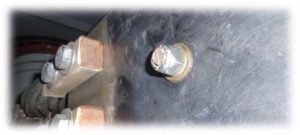
The team immediately went to the site control room and, at the recommendation of the Dynamic Ratings’ experts, the utility invoked shutdown procedures to protect the generation system and prevent a potentially catastrophic failure. Upon closer examination, the team discovered a small hole on the outside of the neutral box with sparks coming from it, and a mounting rod had come loose. The nut on the right shows the result of the arcing versus other installed nuts. The loose connection, was the source of the floating potential discharges recorded by the monitor.
Following safety protocols and procedures, the utility deployed a team to repair and restore the system durin a service outage. As a result of findings, the loose rod was repositioned. Loctite® was added to the threads on all system rods, and all nuts were replaced using stainless steel lock nuts. The hole in the neutral box was welded during the service outage.
External View

Internal View

Equipment Failure

The Loose Nut

The Result
This success story highlights that online monitoring, control and communications are invaluable resources when installed on your assets. This utility’s decision to install Dynamic Ratings’ RMM on their steam turbine generation system kept valuable operations and performance data records that proved invaluable. The collected data enabled Dynamic Ratings’ experts to quickly and efficiently deduce the root cause of the trips, restore the effected equipment, and avoid potential damage to very expensive assets and lost generation.
Restored Equipment