

Utility asset managers face a hidden enemy that silently affects their most valuable assets. It doesn’t announce itself with alarms but slowly and quietly works at degrading transformer insulation, accelerating aging at an alarming rate. Studies have shown that with every 1% increase in moisture, the transformer aging rate doubles.
Moisture doesn’t just compromise your transformer’s performance. As moisture seeps into the winding insulation, it weakens the oil’s dielectric strength, creating conditions for flashovers and arcing that can rapidly transform into a transformer failure.
The relationship between moisture and temperature creates a complex dynamic that directly impacts transformer reliability and operational lifespan. Understanding and managing this relationship through effective monitoring strategies can mean the difference between premature asset failure and decades of reliable operation.
Temperature’s Critical Role in Transformer Health
Temperature monitoring forms the backbone of effective transformer management, as it directly influences both moisture movement and insulation aging. Every utility should monitor the top oil, bottom oil, winding hotspot, OLTC, and ambient temperatures because these measurements work together to reveal your transformer’s health.
Understanding these temperature patterns enables predictive maintenance strategies. The winding hotspot temperature, combined with ambient conditions, determines loading capacity and reveals when cooling systems are becoming inadequate. OLTC temperature monitoring detects mechanical issues before they cause failures, while the temperature differential between top and bottom oil indicates circulation problems that can trap moisture and accelerate aging in specific zones. Monitoring these variables offers valuable insights into the transformer’s internal dynamics and operational characteristics.

Moisture’s Impact on Performance and Reliability
Moisture management in power transformers is a persistent concern for aging assets. As excessive moisture accumulates in transformer oil, it accelerates the aging process while simultaneously reducing the oil’s dielectric strength.
Moisture content flows and fluctuates with the temperature. As temperatures rise, moisture trapped in the paper is released and migrates into the oil. When temperatures fall, this process reverses with moisture being absorbed back into the paper. This continuous movement is governed by the solubility and absorption limits of paper and oil, creating a dynamic equilibrium that shifts with every temperature change.

The consequences of elevated moisture levels extend beyond simple dielectric strength reduction. Residual moisture in winding insulation at high temperatures can trigger the release of free gas bubbles. Bubbling happens when moisture held within the winding paper heats up and transforms into steam, creating the voids in the insulating paper. These voids have a lower dielectric strength than surrounding insulating oil.
As these bubbles form and rise through the oil, they accumulate and merge to expand the areas of reduced dielectric strength. This increases the likelihood for flashover events and arcing, which could lead to a potential failure.
Common Sources of Moisture Infiltration
Moisture infiltration in transformer insulation systems comes from several different sources, each presenting unique challenges for asset managers.
- A small oil leak or seepage create pathways for moisture and air to enter the oil through diffusion.
- A weakened gasket provides a “two-way path” for oil to egress, while permitting air and moisture to ingress from the environment.
- Broken conservator bag is no longer tightly sealed, allowing moisture and air to enter the system.
- Damaged or non-functioning N2 pressure system or poor maintenance of silica-gel breathers create pathways that allow air and moisture to enter the system.
- Thermal breakdown or depolymerization of the insulating paper creates moisture that dissolves in the oil. As moisture and temperature work together and break down internal components, it degrades the insulation system and ultimately increases the aging rate.
Understanding Transformer Moisture Distribution
Moisture distribution within a transformer’s insulation system shows the complexity of electrical assets. Temperature levels vary within a transformer, and physical measurements will yield different values depending on the measurement’s location. In windings, the insulating properties of the paper can be up to a 30° difference between the paper at the winding hotspot and the bottom oil temperature.
This temperature variation drives water migration, creating a gradual moisture gradient from top to bottom that inversely correlates with the temperature rise. The temperature and insulation thickness additionally impacts the time it takes for the water to move between the pressboard and the oil.
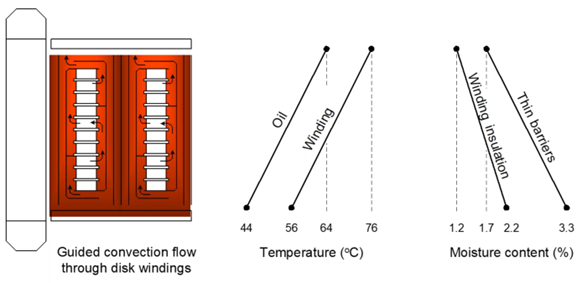
The distribution of materials within a transformer reveals why moisture management is so challenging. The insulation weight distribution in the transformer typically consists of around 90% oil, 5% thick insulation, 3% windings and 2% thin insulation whereas majority of water distributed in the solid insulation is around 55% in thick insulation, 22% in thin insulation, 22% in the winding, and less than 1% in the oil.
This disparity between material distribution and moisture concentration highlights the complexity of moisture monitoring. Additionally, moisture exists in three different states: dissolved, bound, and free water. Dissolved moisture is free to move between oil and paper insulation. Bound moisture stays attached to acid, fibrous particles, and dust, and free water is usually found at the bottom of the tank.
Historically, utilities have relied on scheduled oil sampling programs, dissolved gas analysis, and moisture content testing to assess transformer condition. The Karl Fischer Titration test measures the absolute moisture content in the oil and reports in parts per million (ppm). This measurement standard measures all three moisture states but cannot differentiate dissolved from bound water. This limitation has driven the development of monitoring that provides real-time insights into moisture dynamics.
Advanced Moisture Monitoring Solutions
Keeping transformers’ insulation as dry as possible is important to ensure optimal performance and longevity. With condition-based monitoring, utilities are able to gain real-time and continuous insights to slow down the insulation aging rate.
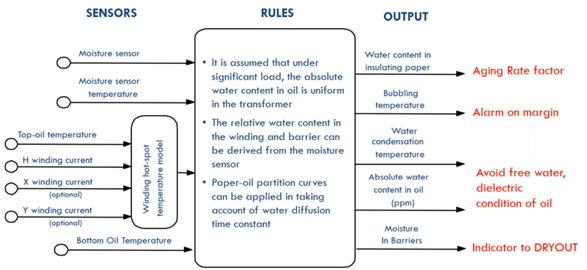
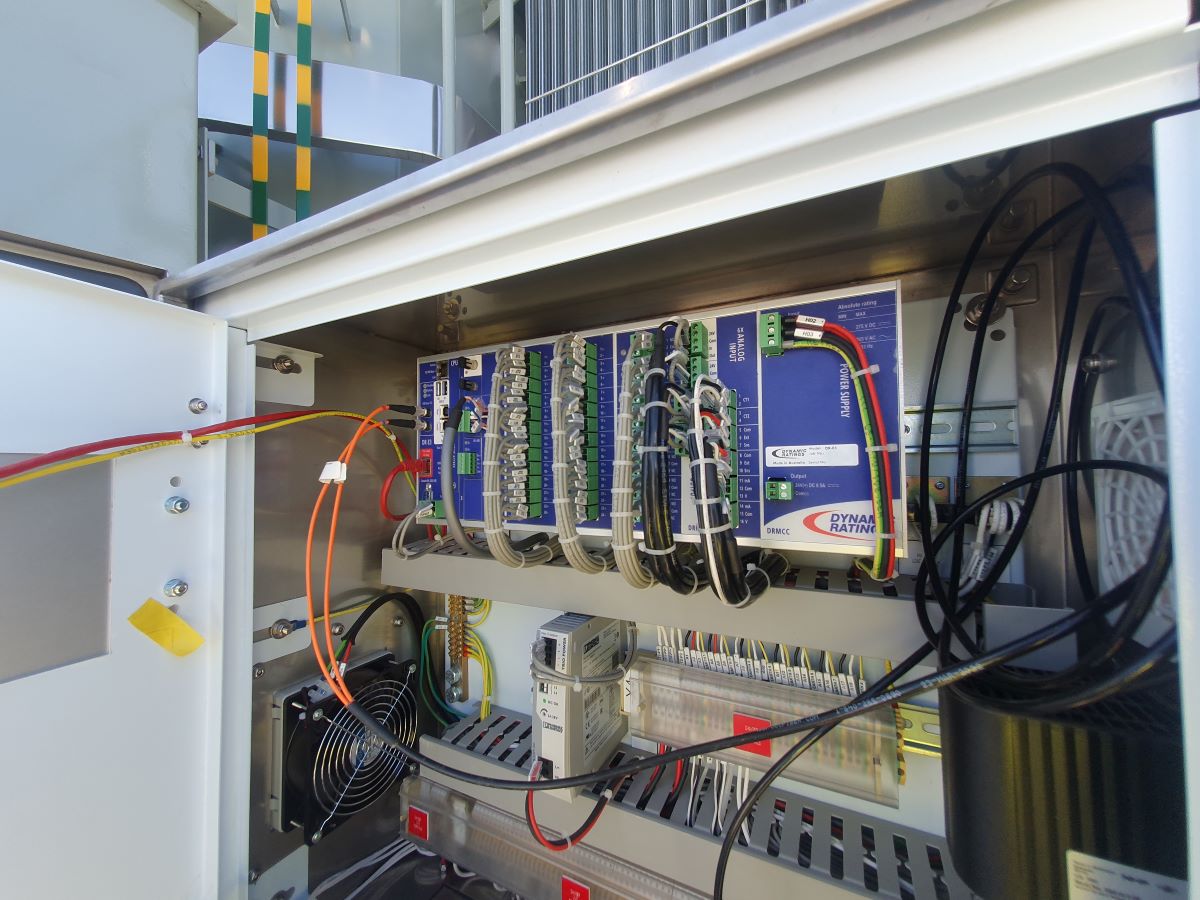
The E3 Transformer Monitor integrates moisture sensor data and other parameters as part of the moisture management model. With its advanced analytics, it can analyze the active moisture modeling, advanced thermal modeling, and the insulation health to best determine the moisture content.
This comprehensive solution provides a comparison of both measures and calculations of the ambient, tank top oil, and winding hotspot temperatures in its easy-to-use webpages. With predictive SMART cooling, the monitor uses the ultimate top oil temperature and the ultimate winding hotspot temperature data calculations to recognize when the transformer temperatures are increasing beyond the desired level.
The ability to accurately assess insulation condition supports more informed asset management decisions. If elevated moisture levels are detected, maintenance interventions can be scheduled to restore the insulation integrity. Utilities can confidently manage their assets and prevent premature failures.
Building a Foundation for Reliable Power Delivery
Effective moisture monitoring represents a fundamental component of modern transformer asset management, providing the insights necessary to optimize performance, extend asset life, and ensure reliable power delivery. Traditional oil sampling alone often can’t keep up with the complex relationship between moisture, temperature, and insulation aging.
Online monitoring is designed with these challenges in mind. It goes beyond basic measurements to deliver a full picture of transformer health—including real-time moisture levels—alongside other key parameters.
The Dynamic Ratings E3 Transformer Monitor uses its advanced capabilities to address today’s challenges. It goes beyond basic measurements to deliver real-time moisture levels and a full picture of transformer health. By implementing monitoring solutions, utilities can take a proactive approach rather than a reactive strategy to maximize their transformer investments.
With growing electrical demand, asset visibility and continuous monitoring are more critical than ever. The investment in advanced moisture monitoring delivers long-term value by extending the assets life, lowering maintenance costs, and improving reliability across the power grid.
Contact us to today to adapt this technology into your asset management strategy.
Author: Katie Garland, Dynamic Ratings