

Transformer bushings don’t make headlines, until they fail. And when they do, the consequences can be devastating. Bushing failures account for approximately 20% of all transformer failures worldwide, making them one of the main causes of unplanned transformer outages.
What makes bushing failures particularly dangerous is their unpredictability. A bushing can appear perfectly normal one day and fail catastrophically the next, triggering fires and widespread power outages.
A single transformer failure can cascade into millions of dollars in replacement costs, emergency response expenses, and immeasurable economic disruption. This reality makes the case for condition-based monitoring not just compelling, but essential for modern grid management. The question facing utilities is clear. How can they detect these ‘hidden’ problems before they result in catastrophic failures?
Smarter Maintenance Through Condition-Based Strategies
The answer lies in changing how we approach transformer maintenance. In today’s interconnected and power-dependent world, the traditional approach of periodic offline testing for transformer bushings is no longer sufficient. Online bushing monitoring represents an essential asset management strategy, offering utilities a powerful tool to detect deteriorating conditions before they escalate into catastrophic failures.
Online bushing monitoring transforms maintenance from a calendar-driven activity into an intelligent, data-driven process by providing 24/7 visibility into asset health. These systems continuously measure critical parameters like power factor and capacitance in real-time.
Condition-based maintenance offers clear advantages:
- Early detection of subtle changes that occur between testing intervals
- Planned interventions instead of costly emergency responses
- Optimize both budget utilization and equipment availability
- Use historical data to identify patterns and predict replacement cycles
Traditional time-based maintenance has significant drawbacks:
- Unnecessary interventions on healthy equipment
- Missed problems that develop between scheduled tests
- Inefficient use of maintenance crews and budgets
Understanding the financial stakes makes the case for condition-based monitoring even more compelling.

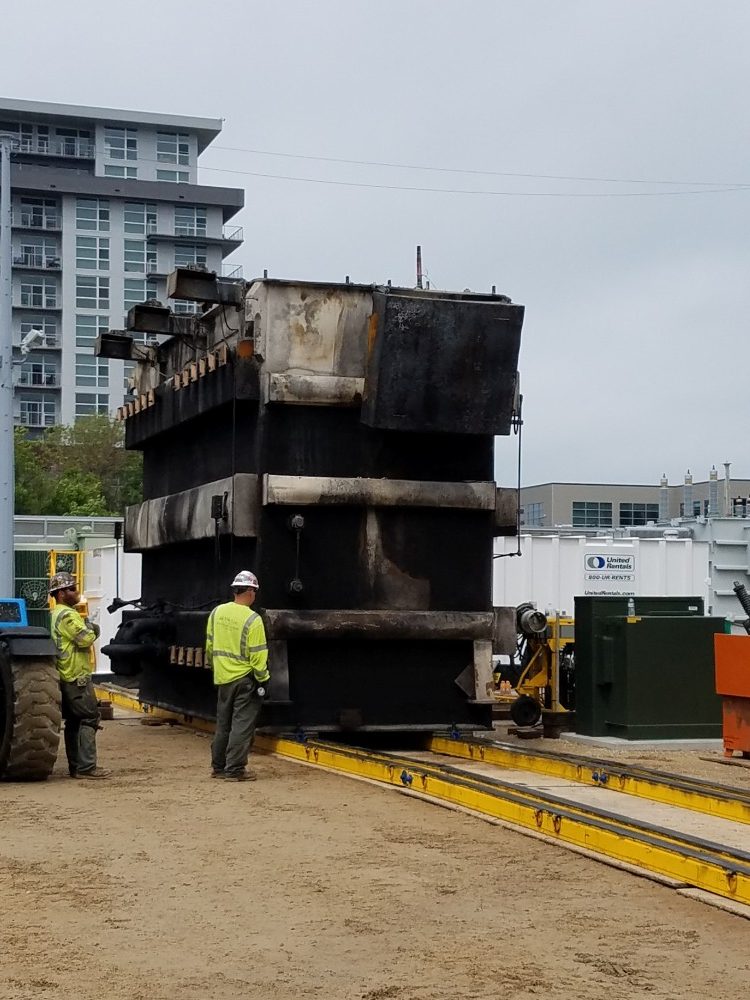
Transformer Failure Costs and ROI of Bushing Monitoring
When a major transformer fails, the financial impact cascades across multiple dimensions:
Direct Costs
- Transformer replacement: $2 million or more for large power transformers
- Extended lead time on transformer components
- Emergency repair crew mobilization
- Temporary power outages and power reroutes
Indirect Costs
- Customer compensation claims
- Regulatory penalties for reliability violations
- Lost productivity and revenue
For transformers serving critical facilities like hospitals, data centers, or government operations, the economic disruption extends far beyond the utility’s balance sheet. With these significant costs at stake, selecting the right monitoring technology becomes a direct need. There are two primary approaches available, each with distinct advantages depending on the utility’s specific needs.
Bushing Monitoring Methods: Sum of Currents vs Voltage Reference
The first approach, Sum of Currents, focuses on detecting imbalances across multiple bushings, while the second, Voltage Reference, provides independent monitoring of each bushing.
Sum of Currents (SoC) Bushing Monitoring Method
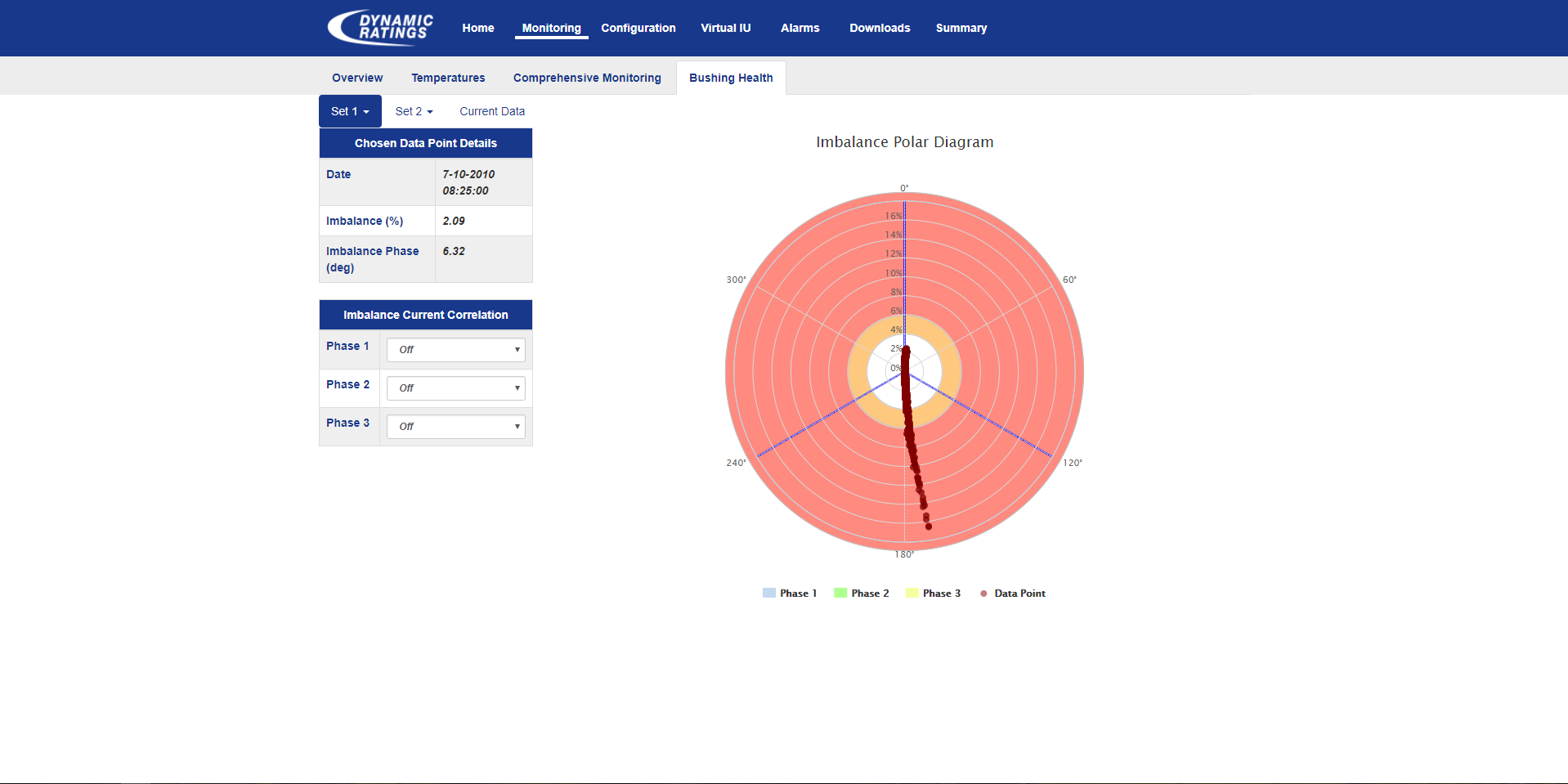
This method monitors leakage currents from all three bushings in a transformer, operating on the principle that identical bushings with balanced voltage should produce a vector sum of currents equal to zero. When degradation occurs in a bushing, it creates an imbalance in the leakage current that the monitoring system can detect. This method identifies problems by observing deviations in the imbalance vector, which indicate changes in power factor or capacitance resulting from aging or environmental stress.
Voltage Reference (VRef) Bushing Monitoring Method
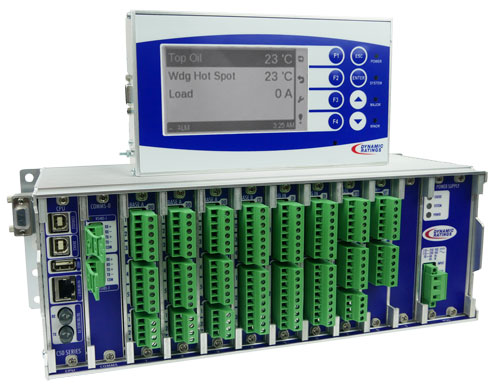
This method uses both leakage current and voltage input to calculate power factor and capacitance for each individual bushing independently. This methodology provides real-time, precise measurements that are particularly valuable in complex electrical environments.
The VRef method excels in situations with significant harmonic distortion or in newer installations where voltage taps are readily available. Its ability to independently monitor each bushing makes it ideal for transformers that serve renewable energy facilities, where traditional monitoring methods may struggle to provide accurate readings. Rather than forcing utilities to choose between these approaches, Dynamic Ratings has developed a solution that combines the strengths of both.
BHM+ Dual-Method Monitoring Technology
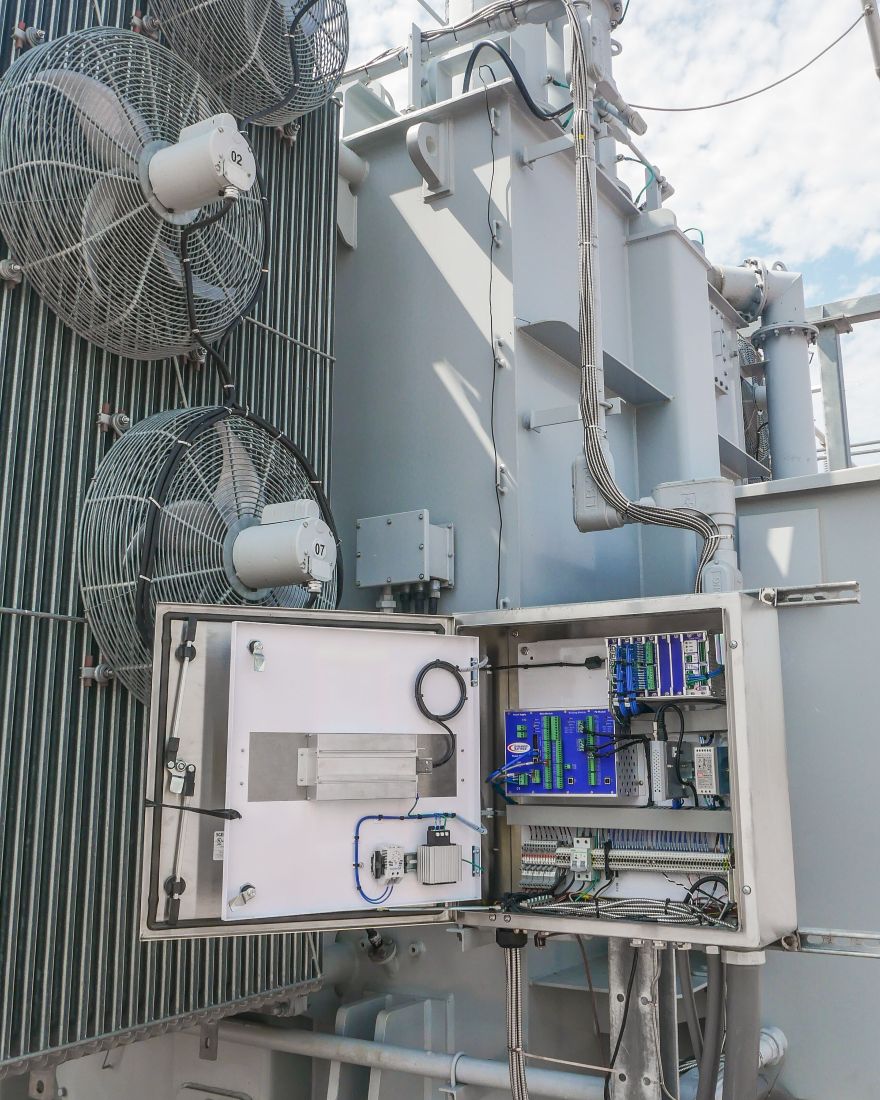
The Bushing Health Monitor Plus (BHM+) enables asset managers to deploy either or both methods simultaneously. This innovation provides unprecedented flexibility, allowing utilities to leverage SoC for reliable baseline monitoring while adding VRef for enhanced accuracy in challenging environments.
Transformer Bushing Monitoring Case Study: Washington D.C. Utility
Critical Transformer Infrastructure at Risk
The value of online bushing monitoring transitioned from theory to proven reality when a major east coast utility serving the United States’ capital faced a potentially catastrophic situation. The utility operated a critical 500,000-volt, 392 MVA transformer providing power to government offices, residential neighborhoods, and the commercial heart of Washington D.C. A failure of this transformer would have resulted in widespread disruption to essential services and created significant national security concerns.
What prevented this potential disaster was a decision the utility had made years earlier by investing in Dynamic Ratings online transformer monitoring technology. That investment was about to prove its value.
Bushing Health Monitor Alarm Detection
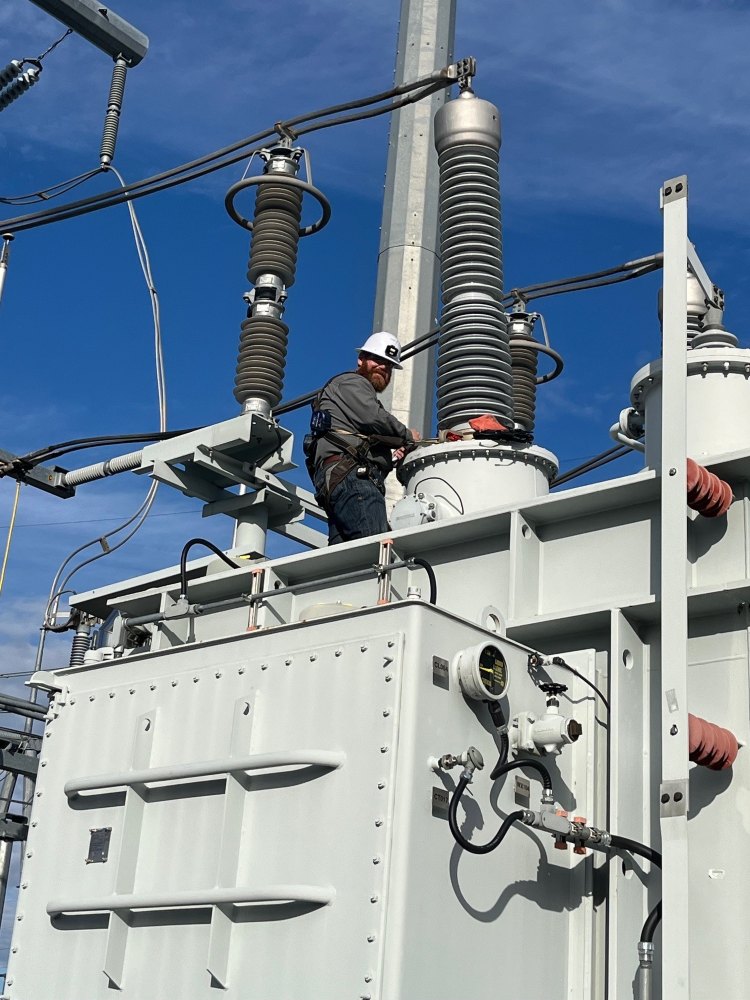
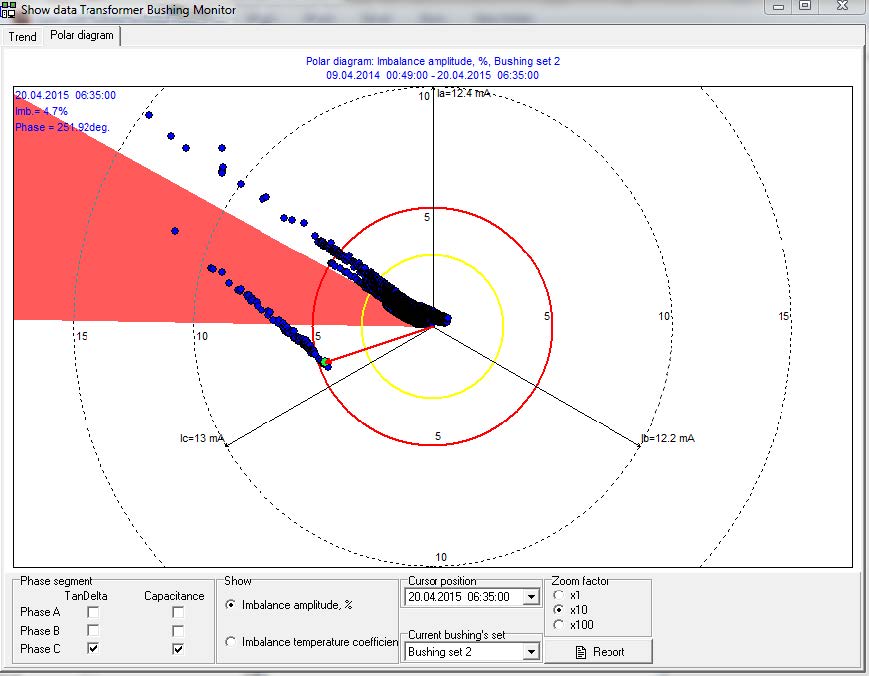
The Bushing Health Monitor began displaying alarm conditions on both the local operator interface and the remote panel annunciator in the control building. The system measured elevated power factor and capacitance values from the X3 bushing on the transformer’s 138,000-volt side.
Emergency Response and Offline Testing Validation
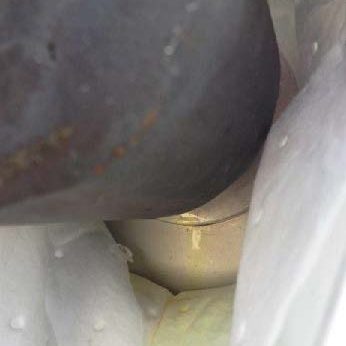
Recognizing the severity of the alarm, the utility immediately initiated its emergency response protocol. The offline diagnostic testing completely validated the online monitoring system’s findings, confirming the bushing’s deteriorated condition. This correlation between online monitoring data and traditional offline testing methods demonstrated the reliability and precision of the online monitoring solution.
Cost Savings and Benefits of Early Bushing Failure Detection
The financial implications of this successful intervention were substantial. Engineering estimates indicated that if the bushing had been allowed to fail completely, the resulting damage to the transformer would have necessitated a full replacement at a cost exceeding $2 million. However, the true cost avoided extended far beyond equipment replacement. Washington D.C. escaped the customer service costs associated with a major power outage affecting government operations, commercial businesses, and residential areas.
Why Online Bushing Monitoring is Essential for Critical Infrastructure
The Washington D.C. case study demonstrates a fundamental truth: for transformers serving critical infrastructure, online bushing monitoring isn’t a luxury—it’s a necessity.
This case study should prompt every utility to ask themselves:
- How many critical assets lack continuous monitoring?
- What would a catastrophic failure cost your utility?
- Can you afford to rely on periodic testing alone?
The answers to these questions point to an unavoidable conclusion: The utilities that thrive won’t be those that respond fastest to failures. They’ll be those that prevent failures from happening in the first place. Online bushing monitoring provides the early warning system that makes prevention possible. Contact us today to learn more about online bushing monitoring with the BHM+.
Author: Katie Garland, Dynamic Ratings