Introduction
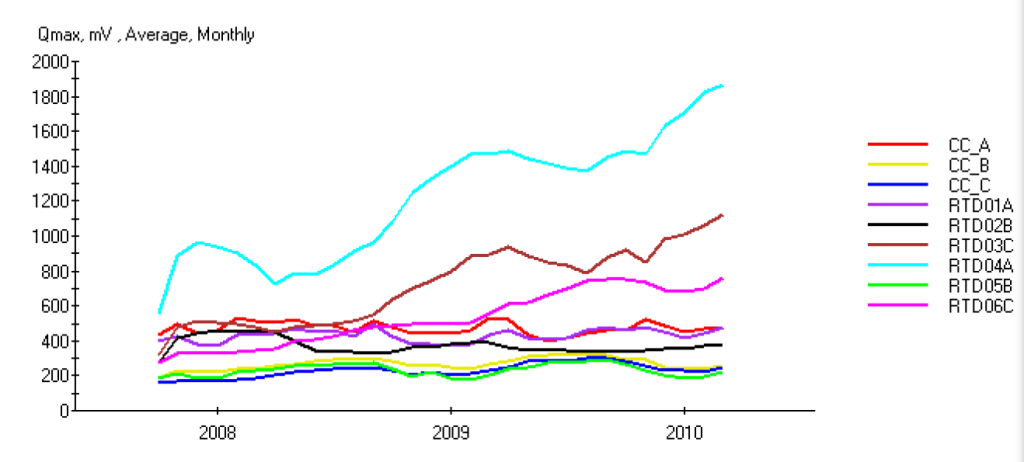
A large machines motor had been periodically measured to be showing significant partial discharge (PD) activity. The data documented a steady increase in PD activity over a multi-year period.
The Challenge
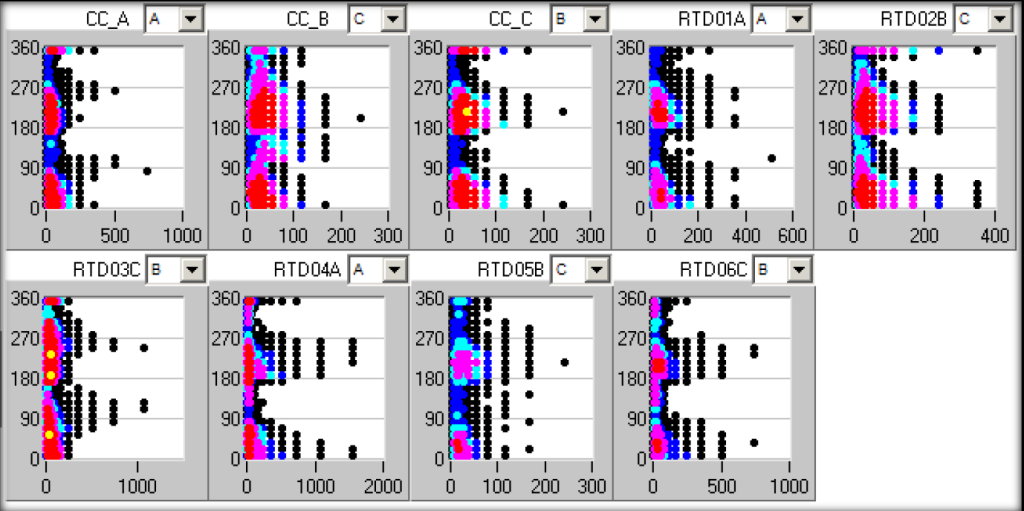
The highest levels of PD activity were reported on RTD’s numbered (3, 4 and
6.) Dynamic Ratings felt that due to the balanced polarities and correlation with
the operating parameters that void type defects existed within the insulation
structure. It was believed the winding was tight since the PD activity was monitored during a motor start and no adverse effects were noted.
A supplier performed periodic testing and concluded that the majority of the defects were due to loose windings or slot exit points. The customer decided to obtain a second opinion, which was not a bad idea considering their stated importance of this machine to their operations economic value and the estimated time to replace and commission a replacement motor.
The Solution
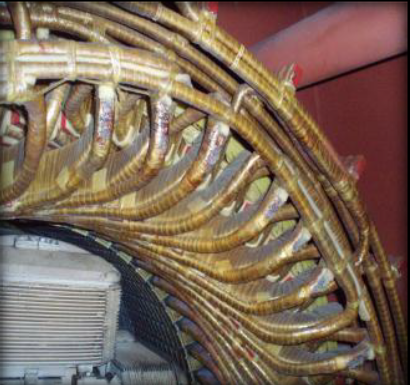
An outage was scheduled for March 2010 and an outside consultant was hired to perform an inspection and make repairs. The winding was found to be clean and tight and there were no indications of PD activity at the slot exit points. The consultant applied additional gradient paint hoping that this would reduce the PD activity.
Dynamic Ratings was called. Using our Rotating Equipment Monitor (RMM), PD data was collected and analyzed. As seen below, after the outage the PD activity (evidence by dots) had not been reduced and continued to increase. It is evident that the vendor’s application of the grading paint had no effect.
The Result
PD usually begins within voids, cracks, or inclusions within a solid dielectric or at conductor-dielectric interfaces. The critical machine remained in operation and subject to increasing levels of PD Activity.
The customer documented an estimated $70,000.00 in cost savings as the difference in the cost of taking the planned outage versus having a forced outage.
Continuous monitoring of partial discharge activity can provide early indication of potential failure. By proving this early warning, asset management and maintenance personnel can schedule a planned outage. Taking a planned outage is far more cost effective than having an unexpected outage.